
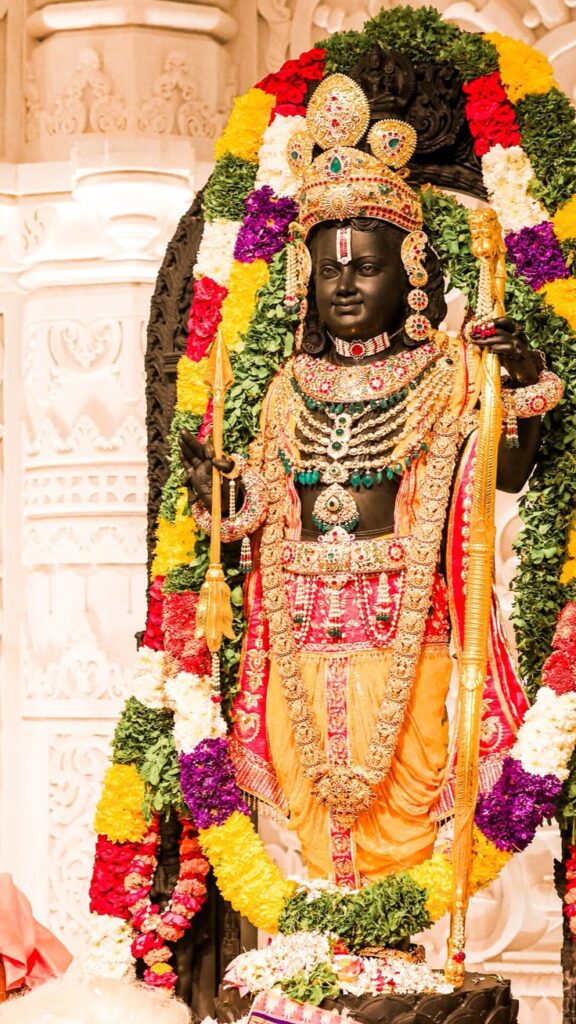
The Lord Rama
Lord Rama, the seventh avatar of Vishnu, embodies truth, virtue, courage, and the triumph of dharma.
Ram Mandir Ayodhya Judgment: A Landmark in India’s Legal and Cultural History
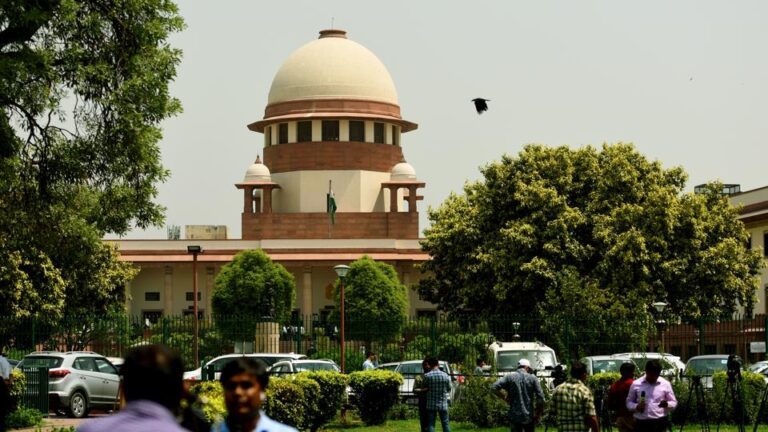
The Ram Mandir–Babri Masjid dispute has been one of the most sensitive and long-standing legal, religious, political, and historical issues in India. Rooted in faith and identity, this conflict spanned more than a century, shaping the nation’s social and political landscape. After decades of intense debate, mass movements, archaeological surveys, and complex litigation, the Supreme Court of India delivered its landmark judgment on 9 November 2019, finally bringing closure to the dispute over the land in Ayodhya, Uttar Pradesh — revered by millions as the birthplace of Lord Ram. This verdict not only ended a prolonged legal battle but also symbolized India’s ability to seek harmony through constitutional justice and peaceful resolution.
Historical Background
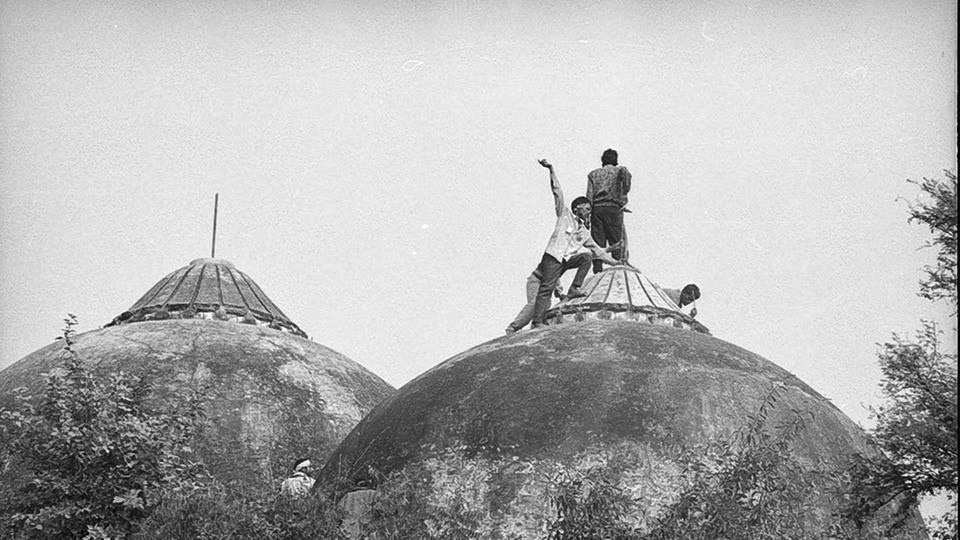
The conflict dates back several centuries, but it gained prominence in modern times after the demolition of the Babri Masjid on 6 December 1992. The mosque, built during the Mughal era by Mir Baqi, a general of Emperor Babur, was claimed to have been constructed on the birthplace of Lord Ram. The incident triggered nationwide communal violence and legal battles that lasted for decades.
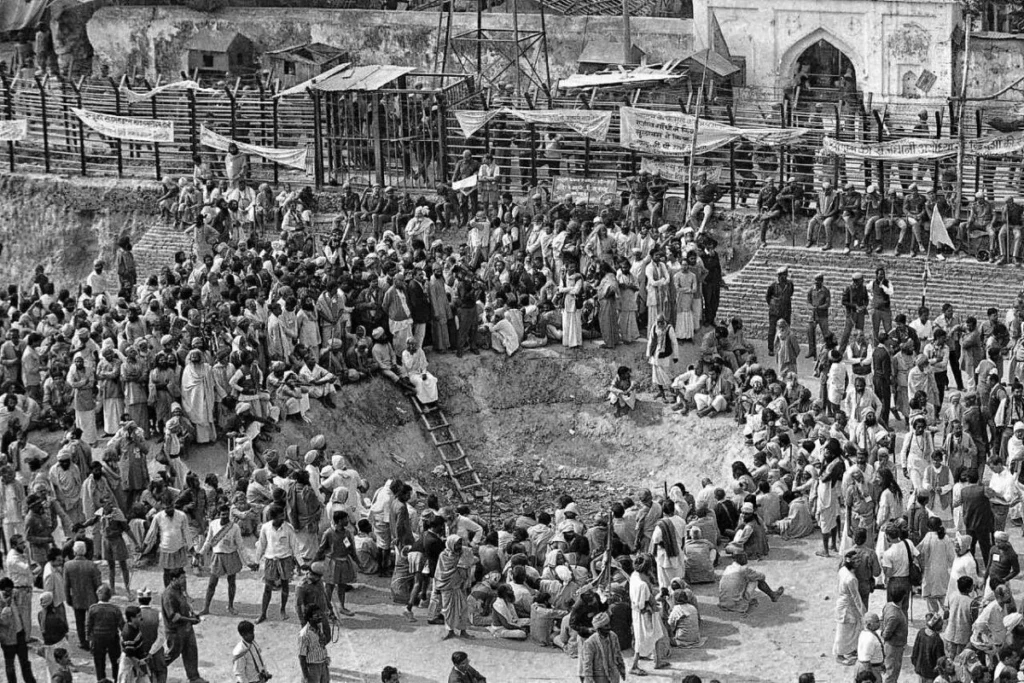
Over the years, archaeological surveys, witness testimonies, and historical documents were presented in court to determine the true nature of the site. The Archaeological Survey of India (ASI) conducted excavations and reported evidence suggesting that a temple structure existed beneath the demolished mosque, which became a crucial point in the final judgment.
Unseen Photos
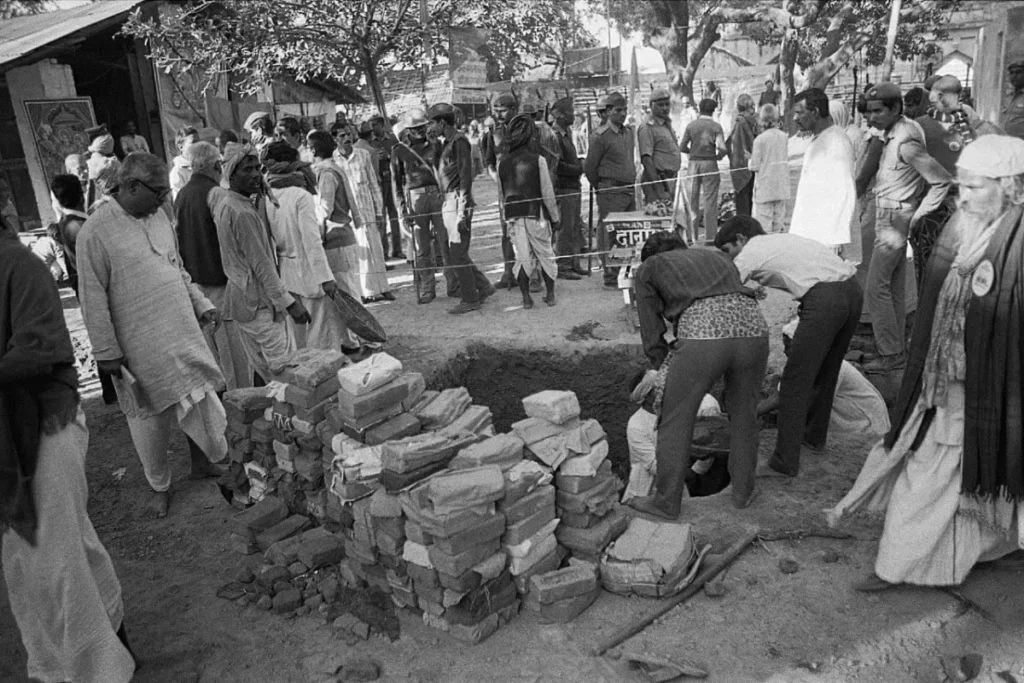

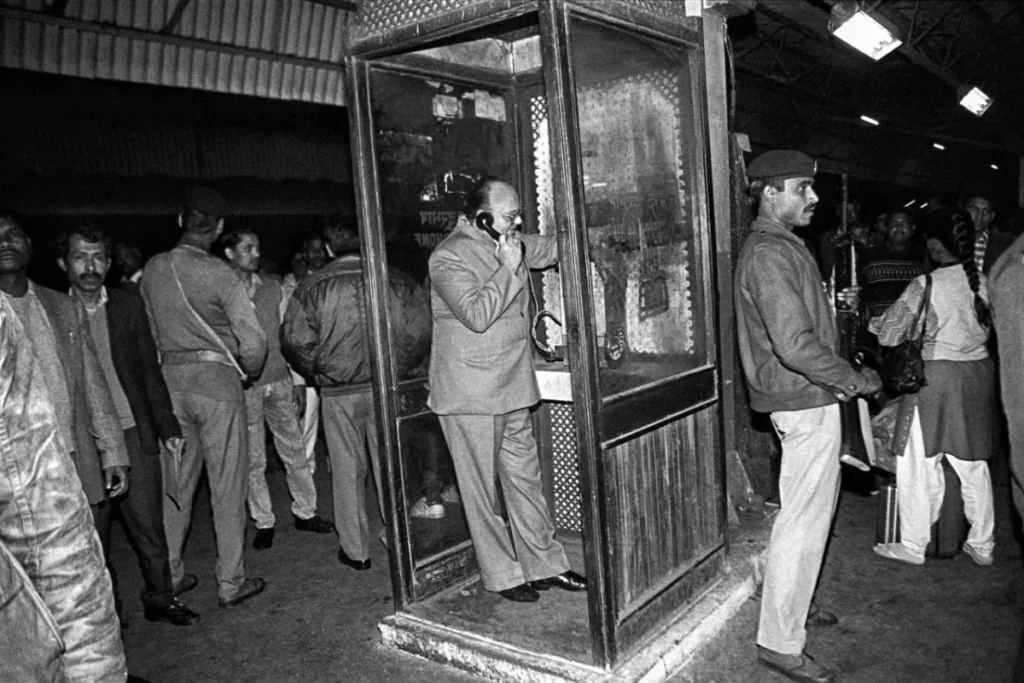
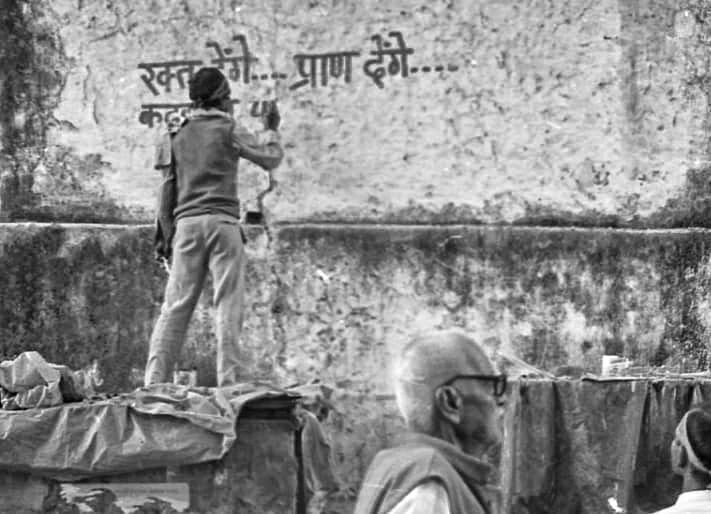

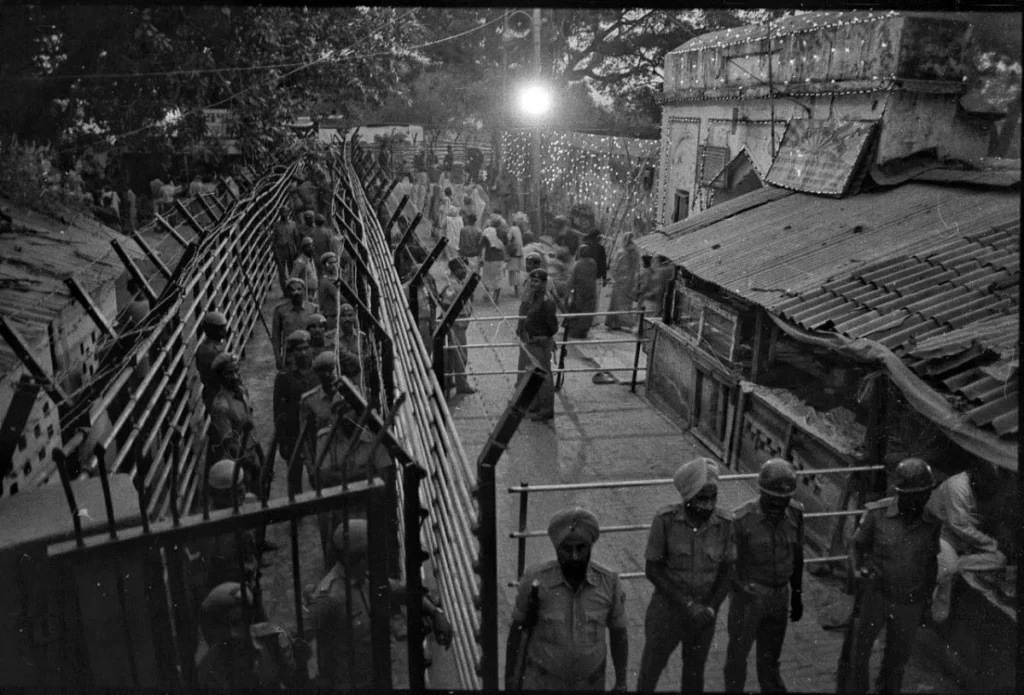
The Supreme Court’s Landmark Judgment
Download the Ram Mandir–Babri Masjid Judgment (PDF)
For readers who wish to explore the complete legal reasoning and details of this historic decision, you can access the official Supreme Court judgment document below. This comprehensive verdict explains every argument, evidence, and conclusion drawn by the Hon’ble Court in the Ayodhya land dispute case. Reading it offers deep insights into how faith, law, and history were balanced in one of India’s most significant rulings.
On 9 November 2019, a five-judge Constitution Bench of the Supreme Court, led by then Chief Justice Ranjan Gogoi, delivered a unanimous verdict. The key points of the judgment included:
The entire disputed land (2.77 acres) was granted to the Hindu parties for the construction of a Ram Temple.
The Sunni Waqf Board was allotted an alternative 5-acre land in Ayodhya to build a mosque.
The Court also acknowledged that the demolition of the Babri Masjid in 1992 was an illegal act, emphasizing the need to uphold secularism and constitutional values.
The judgment sought to balance faith and law, promoting reconciliation between communities while ensuring justice based on evidence, not emotion.
Formation of Shri Ram Janmabhoomi Teerth Kshetra Trust
Following the Supreme Court’s direction, the Government of India formed the Shri Ram Janmabhoomi Teerth Kshetra Trust on 5 February 2020. This trust was given the responsibility of overseeing the construction and management of the Ram Temple in Ayodhya.
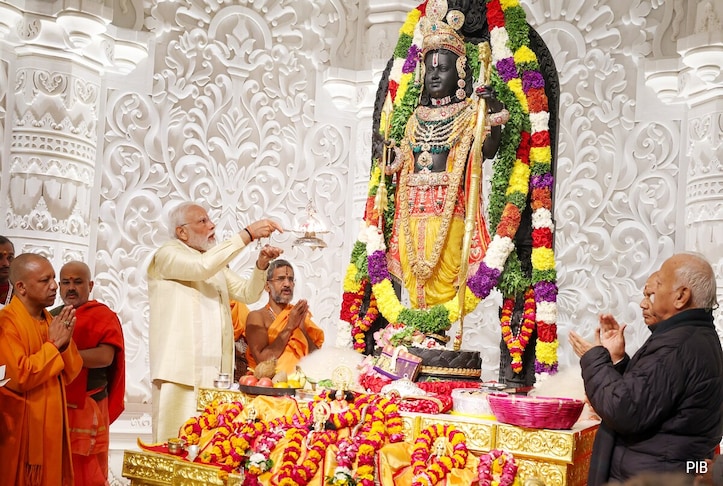
The foundation stone (Bhoomi Pujan) was laid by Prime Minister Narendra Modi on 5 August 2020, marking a moment of immense spiritual and cultural significance for millions of Hindus across the world.
Construction of the Ram Temple
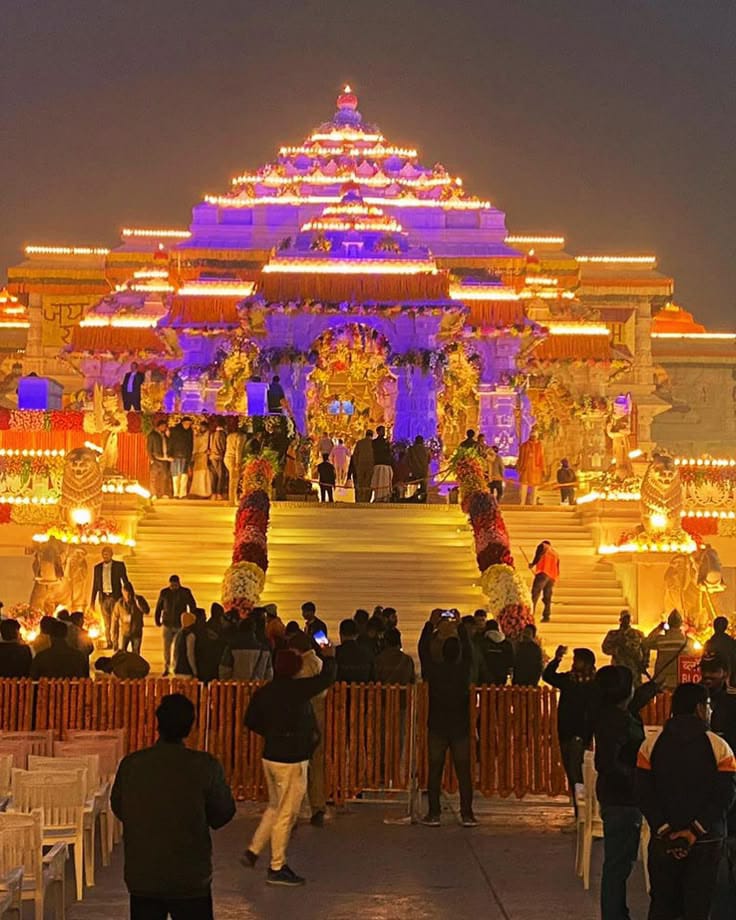
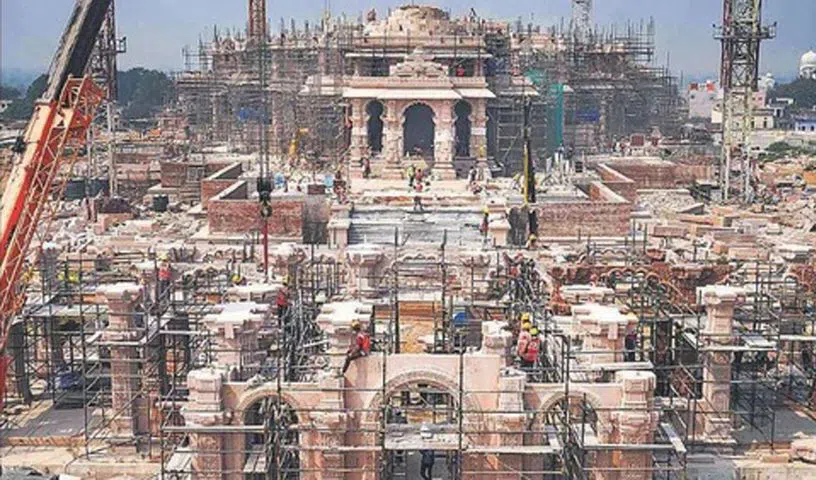
The grand Ram Mandir has been designed with intricate architecture inspired by traditional Indian temple designs. Built primarily from pink sandstone, it represents India’s heritage, devotion, and craftsmanship. The temple structure includes a main sanctum (Garbhagriha) where the idol of Lord Ram Lalla will be enshrined, along with beautifully carved pillars and domes.
The first phase of the temple was completed by January 2024, and the Pran Pratishtha (consecration ceremony) was held with massive public participation and global attention. The event symbolized not only religious fulfillment but also national unity and cultural revival.
Impact and Significance
The Ram Mandir judgment is often hailed as a symbol of India’s judicial maturity, as it peacefully resolved one of the nation’s most divisive issues through constitutional means. It reflected the judiciary’s ability to handle cases involving religion and emotion with impartiality, evidence-based reasoning, and balance.
For millions, the construction of the Ram Temple represents faith, justice, and identity. For others, it’s a reminder of India’s commitment to secular values and mutual respect among communities.

Conclusion
The Ayodhya judgment of 2019 remains a defining moment in India’s legal and cultural history. It marks not just the end of a centuries-old dispute, but also the beginning of a new era focused on harmony, faith, and progress.
“The Ram Mandir today stands not merely as a structure of stone and faith, but as a monument to India’s democratic spirit and the power of peaceful resolution.”